Neris Smart-1 TPU
The Neris Smart-1 TPU is a single-seater hybrid skin-on-frame kayak made by Neris (Ukrainian / Lithuanian manufacturer; previously branded Skin Boats). It sits at the sweet spot between packraft-level portability and sea-kayak-level capability. The TPU skin variant is the only realistic modern descendant of the discontinued Feathercraft Aironaut.
Specs
| Property | Value |
|---|---|
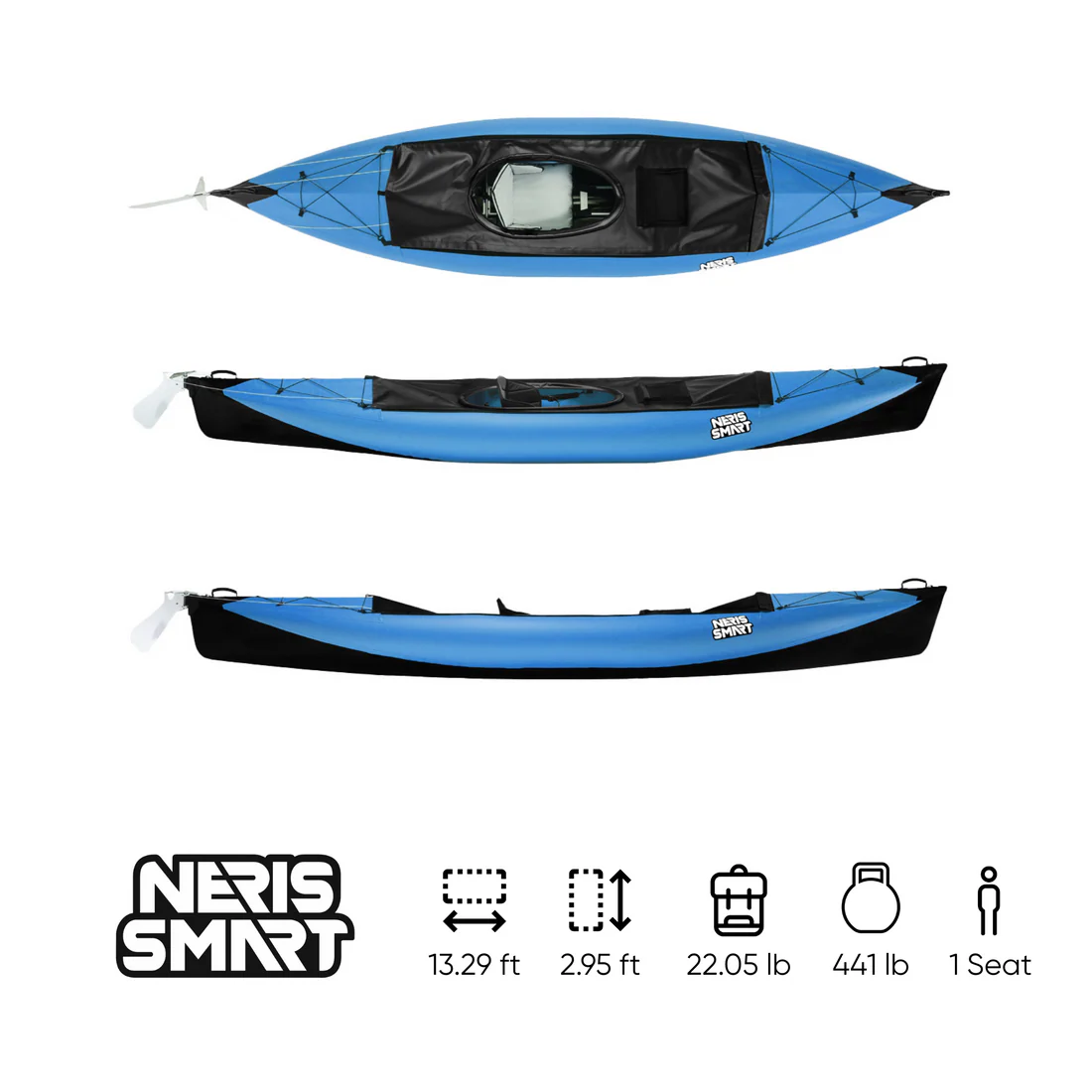
| Length | 4.05 m (13’3”) |
| Beam (width) | 90 cm |
| Weight (boat only) | 10.0 kg |
| Capacity | ~120 kg paddler + gear |
| Skin material | TPU (Thermoplastic Polyurethane) |
| Frame | Duralumin aluminum (keel + ribs) |
| Hull shape | Symmetrical, slightly V’d |
| Setup time | ~10 minutes |
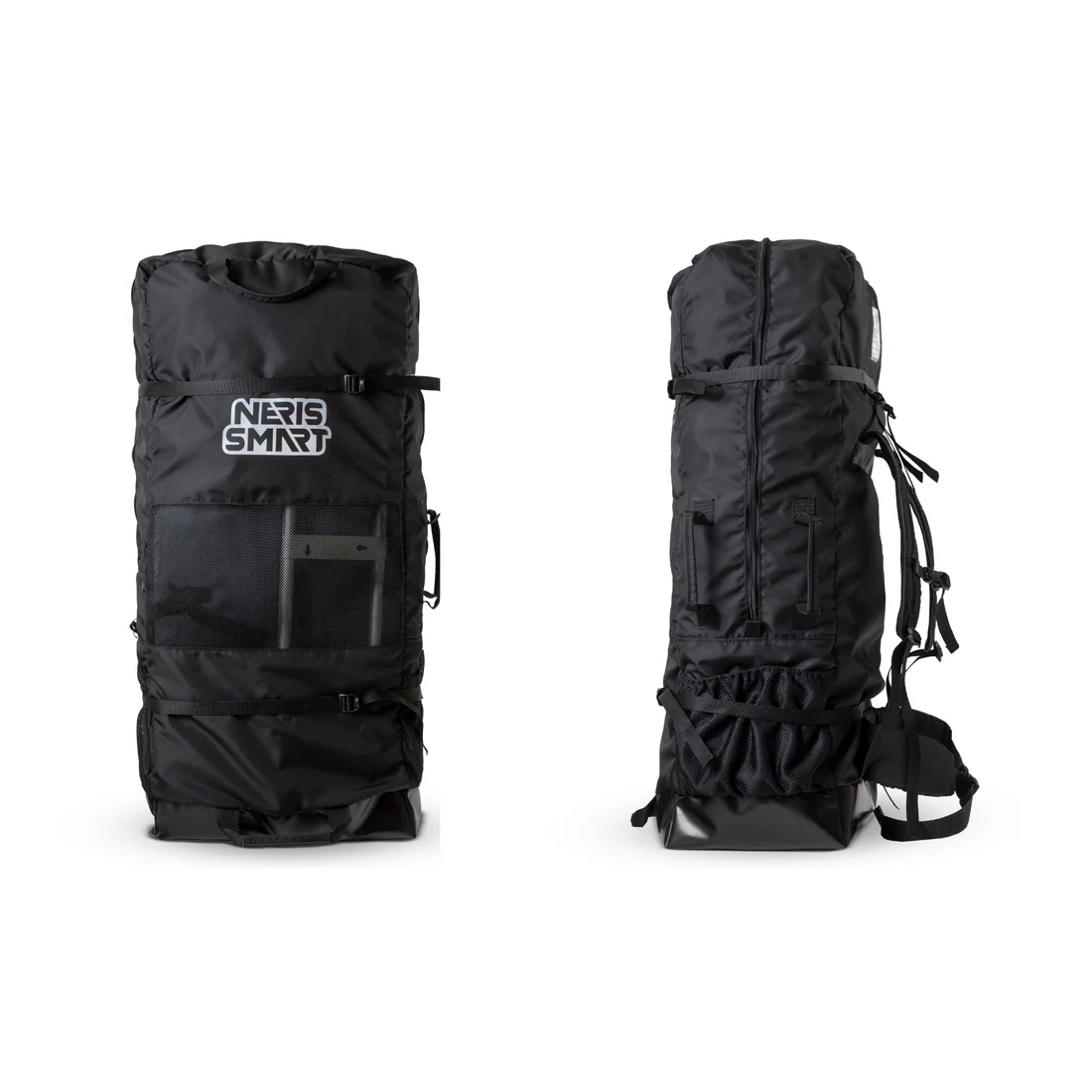
| Packed size | ~80 × 35 × 25 cm (single backpack) |
| Cockpit | Sit-in; spray skirt compatible |
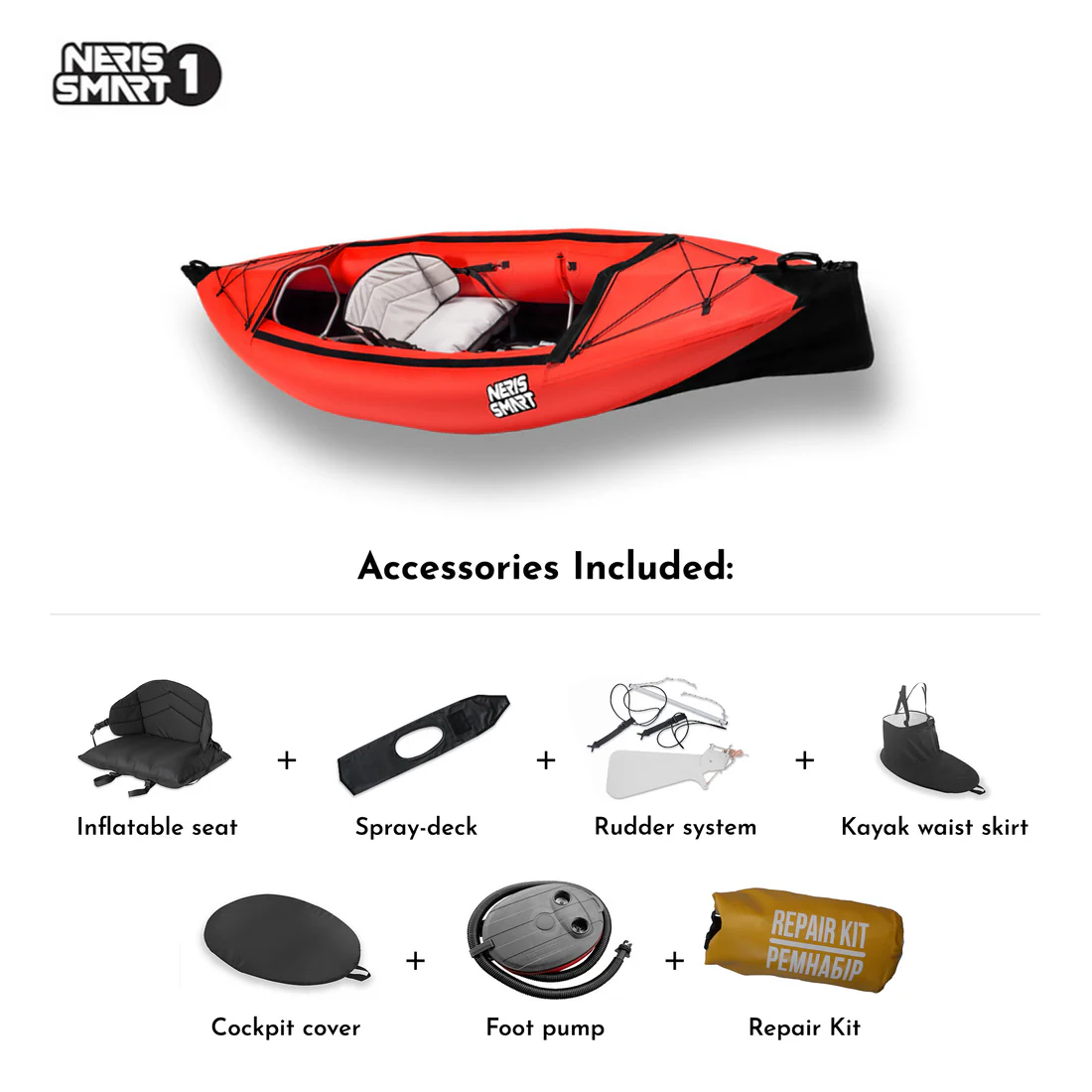
The boat itself ships with the frame, the skin, an inflatable seat, two side sponsons (which inflate to tension the skin), and a backpack. The PFD, paddle, and pump are bought separately.
Why TPU (and not PVC)
TPU is an elastomer (rubber-like polymer) that is:
- Lighter than PVC by ~30–40% for the same hull strength.
- More abrasion-resistant — Taber tests show TPU significantly outperforms PVC.
- More UV-stable — PVC needs plasticizers that leach out under tropical sun; TPU is dimensionally stable.
- Better folder — TPU doesn’t crease into permanent stress lines after years of packing.
The TPU skin is a paid upgrade over the standard PVC build, but it is what makes the boat hit the 10 kg target and last for a decade of weekly use.
See TPU vs PVC for Kayaks for the full materials breakdown.
On-water characteristics
Strengths
- Primary stability is enormous. At 90 cm wide, the Smart-1 feels like a small floating dock. You can lean over to take a photo, dig in your dry bag, or sit cross-legged without worry. Genuinely unflippable in flat water.
- Tracks reasonably straight despite the symmetrical hull, thanks to the keel rib in the frame.
- Quiet. TPU skin doesn’t drum or vibrate the way drop-stitch PVC does.
- Handles rivers and choppy bays beautifully. Han River, Imjin, Taean inlets — all easy.
- Tough. TPU will shrug off most reef and rock contact that would dent a fibreglass boat or puncture a thin PVC inflatable.
Limitations
- Wide beam = wind sail. The boat catches crosswind. You will spend energy on corrective paddle strokes whenever the wind picks up.
- Cruising speed caps around 4.5–5 km/h with a steady paddler. Top speed is limited by the wetted surface of the wide hull.
- Bobs over swell rather than cutting it. In 1.5+ m ocean swell, the boat tilts with the surface of the water (low secondary stability). Manageable for a strong paddler with good core engagement, but tiring.
- Cargo capacity is moderate — the cockpit + sponson layout means the dry-bag space behind the seat is smaller than a true expedition sea kayak.
Suitability
| Use case | Verdict |
|---|---|
| Han River day paddles | Excellent |
| Korean coastal day trips (Taean, Namhae) | Excellent |
| Jeju Kayak Circumnavigation Challenge | Workable; pick weather windows carefully |
| Philippines island-hopping (Cebu, Palawan) | Workable; fine in protected bays |
| Indonesia (Raja Ampat, Pulau Seribu) | Workable in calm conditions; not for crossing open straits |
| Multi-week expedition camping | Tight cargo space; possible but not ideal |
| Whitewater rivers | No — wrong category |
Setup process
- Lay out the frame: assemble the keelson (longitudinal beam) and rib stations.
- Slide the frame into the open skin from the cockpit opening, like dressing a snake.
- Lock the frame into the skin’s bow/stern pockets.
- Inflate the two side sponsons via mouth or mini-pump (a few breaths each — they don’t need much pressure, just enough to tension the skin).
- Inflate the seat, position it, clip foot pegs.
- Attach spray skirt to the cockpit coaming if going to sea.
Total time after a few practice runs: 8–12 minutes. First time will be ~30 minutes.
Packing down is roughly the reverse and slightly slower because of folding the skin neatly to fit the backpack.
Configuration / accessories worth ordering
When you place a custom order with Neris (see Importing a Kayak to Korea), specify the Expedition Configuration:
- Integrated spray deck + neoprene waist skirt — non-negotiable for open ocean.
- Foot-pedal rudder system — even on a wide boat, the rudder pays for itself the first time you fight a crosswind.
- Conical dry bags (60 L pair) sized to fit the bow/stern interior.
- Repair kit — TPU patches, glue, spare seam tape.
- Spare sponson valves (cheap insurance).
Items to source locally in Seoul rather than from Neris (shipping inefficiency):
- 4-piece breakdown carbon paddle — KayakMall in Seoul, around ₩300,000–₩600,000.
- Inflatable PFD — ₩100,000–₩200,000.
- Hand pump for the sponsons — any kayak shop, ₩30,000.
What people complain about
- The price. A Smart-1 TPU with Expedition Config and shipping to Korea lands around €2,500–€3,500 (~₩3.5M–₩5M) before customs.
- Lead time. 3–5 weeks from order to delivery.
- The skin is the wear item. Expect to replace it after ~5–8 years of heavy use. Frame and rudder lasts longer.
- No internal stiffener under the seat — back support is moderate. Many owners add an aftermarket foam back band.
Resale market
Used Smart-1 TPUs hold value remarkably well in Europe and Japan. A clean 3-year-old boat sells for ~70% of new price. The skin condition is what buyers inspect first.
Related pages
- Packable Sea Kayak Selection — broader comparison.
- Neris Smart Pro XS — the performance alternative.
- TPU vs PVC for Kayaks — material science.
- Importing a Kayak to Korea — how to actually buy one.
- Kayaking in Seoul and Incheon — where to break it in.